Wednesday, November 3, 2010

PIMCO | Mohamed El-Erian - We've Voted. What's Next For the Economy?

We've Voted. What's Next For the Economy?
  • With the two chambers of Congress split between Democrats and Republicans, the conventional wisdom likely to be repeated over the next few weeks is that political gridlock is good for the economy. While often true, that is not the case today.
  • Democrats and Republicans must meet in the middle to implement policies to deal with debt overhangs and structural rigidities.
  • The economy needs political courage that transcends expediency in favor of long-term solutions on issues including housing reform, medium-term budget rules, pro-growth tax reforms, investments in physical and technological infrastructure, job retraining, greater support for education and scientific research, and better nets to protect the most vulnerable segments of society.

Mohamed El-Erian, Co-CIO/CEO of PIMCO and the voice on the street that I trust utmost in times of uncertainty, casts a veil of uncertainty over the seemingly decisive electoral mandate claimed by the GOP in yesterday's triumph at the polls. The insurgent nature of the GOP movement, spearheaded by the Tea Baggers (Party), does not inspire hope in the prospects of overcoming the policy gridlock in DC that must be addressed before any fundamental changes can be made to the country's rapidly deteriorating long-term fiscal health with an aging population and public pension liabilities light-years beyond the tipping point of permanent insolvency.

Due to the "great age" of leverage, debt and credit entitlement, and the related surge in structural unemployment, the private sector is not in a position to control its own destiny. Emerging markets are rapidly eroding traditional economic and political competitive advantages enjoyed by the US. It is hard to disagree with El-Erian in his conclusion - the extreme nature of today's political discourse is ill-suited to tackling the pressing issues of our time.

Posted via email from Global Macro Blog

Mid-term elections, QE and the markets: Tea and QE | The Economist

But there is also a nice irony at work. The tea party is opposed to massive government spending and bailouts. But QE is a way for the central bank to finance that government spending and to pump money into the banking sector. So on the day that the tea partiers may be celebrating, an unelected central bank will be carrying out a programme, probably totalling several hundred billion dollars, that will cut against everything the partiers stand for.

Buttonwood accurately foresaw the overwhelming victory of the Tea Baggers and we are now mere hours from the likely Federal Reserve announcement of QE2 and the resumption of the printing press. The irony observed in the above excerpt - that the Fed is poised to undermine everything the Tea Baggers fundamentally stand on through its independent monetary authority - is unlikely to be fully appreciated by the media as the day progresses. It will be interesting to see the response of the freshly invigorated GOP activists in the coming weeks leading up to their inauguration early next year. I suspect the radical tone will be subdued by political realities and market uncertainty, not to mention the radical shift in mindset that accompanies a transition from insurgent to incumbent.

Posted via email from Global Macro Blog

Friday, October 29, 2010

PIMCO's Bill Gross | Investment Outlook - Run Turkey, Run

Run Turkey, Run
  • The Fed’s announcement of a renewed commitment to Quantitative Easing has been well telegraphed and the market’s reaction is likely to be subdued.
  • We are in a “liquidity trap,” where interest rates or trillions in asset purchases may not stimulate borrowing or lending because consumer demand is just not there.
  • The Fed’s announcement will likely signify the end of a great 30-year bull market in bonds and the necessity for bond managers and, yes, equity managers to adjust to a new environment.

They say a country gets the politicians it deserves or perhaps it deserves the politicians it gets. Whatever the order, America is next in line, and as we go to the polls in a few short days it’s incumbent upon a sleepy and befuddled electorate to at least ask ourselves, “What’s going on here?” Democrat or Republican, Elephant or Donkey, nothing much ever seems to change. Each party has shown it can add hundreds of billions of dollars to the national debt with little to show for it or move our military from one country to the next chasing phantoms instead of focusing on more serious problems back home. This isn’t a choice between chocolate and vanilla folks, it’s all rocky road: a few marshmallows to get you excited before the election, but with a lot of nuts to ruin the aftermath.

Each party’s campaign tactics remind me of airport terminals pre-9/11 when solicitors only yards apart would compete for the attention and dollars of travelers. “Save the Whales,” one would demand, while the other would pose as its evil twin – “Eat Whale Blubber,” the makeshift sign would read. It didn’t matter which slogan grabbed you, the end of the day’s results always produced a pot of money for them and the whales were neither saved nor eaten. American politics resemble an airline terminal with a huckster’s bowl waiting to be filled every two years.

And the paramount problem is not that we contribute so willingly or even so cluelessly, but that there are only two bowls to choose from. Thomas Friedman, the respected author of The World Is Flat, and a weekly New York Times Op-Ed author, recently suggested “ripping open this two-party duopoly and having it challenged by a serious third party” unencumbered by special interest megabucks. “We basically have two bankrupt parties, bankrupting the country,” was the explicit sentiment of his article, and I couldn’t agree more – whales or no whales. Was it relevant in 2004 that John Kerry was or was not an admirable “swift boat” commander? Will the absence of a mosque within several hundred yards of Ground Zero solve our deficit crisis? Is Christine O’Donnell really a witch? Did Meg Whitman employ an illegal maid? Who cares! We are being conned, folks; Democrats and Republicans alike. What have you really heard from either party that addresses America’s future instead of its prurient overnight fascination with scandal? Shame on them and of course, shame on us. We’re getting what we deserve. Vote NO in November – no to both parties. Vote NO to a two-party system that trades promises for dollars and hope for power, and leaves the American people high and dry.

There’s another important day next week and it rather coincidentally occurs on Wednesday – the day after Election Day – when either the Donkeys or the Elephants will be celebrating a return to power and the continuation of partisan bickering no matter who is in charge. Wednesday is the day when the Fed will announce a renewed commitment to Quantitative Easing – a polite form disguise for “writing checks.” The market will be interested in the amount (perhaps as much as an initial $500 billion) as well as the targeted objective (perhaps a muddied version of “2% inflation or bust!”). The announcement, however, has been well telegraphed and the market’s reaction is likely to be subdued. More important will be the answer to the long-term question of “will it work?” and perhaps its associated twin “will it create a bond market bubble?”

Whatever the conclusion, not only investors, but the American people should recognize that Wednesday, even more than Tuesday, represents a critical inflection point in determining our future prosperity. Of course we’ve tried it before, most recently in the aftermath of the Lehman crisis, during which the Fed wrote $1.5 trillion or so in “checks” to purchase Agency mortgages and a smattering of Treasuries. It might seem a tad dramatic then, to label QEII as “critical,” sort of like those airport hucksters, I suppose, that sold whale blubber for a living. But two years ago, there was the implicit assumption that the U.S. and its associated G-7 economies needed just an espresso or perhaps an Adderall or two to get back to normal. Normal just hasn’t happened yet, and economic historians such as Kenneth Rogoff and Carmen Reinhart have since alerted us that countries in the throes of delevering can take many, not several, years to return to a steady state.

The Fed’s second round of QE, therefore, more closely resembles an attempted hypodermic straight to the economy’s heart than its mood elevator counterpart of 2009. If QEII cannot reflate capital markets, if it can’t produce 2% inflation and an assumed reduction of unemployment rates back towards historical levels, then it will be a long, painful slog back to prosperity. Perhaps, as a vocal contingent suggests, our paper-based foundation of wealth deserves to be buried, making a fresh start from admittedly lower levels. The Fed, on Wednesday, however, will decide that it is better to keep the patient on life support with an adrenaline injection and a following morphine drip than to risk its demise and ultimate rebirth in another form.

We at PIMCO join with Ben Bernanke in this diagnosis, but we will tell you, as perhaps he cannot, that the outcome is by no means certain. We are, as even some Fed Governors now publically admit, in a “liquidity trap,” where interest rates or trillions in QEII asset purchases may not stimulate borrowing or lending because consumer demand is just not there. Escaping from a liquidity trap may be impossible, much like light trapped in a black hole. Just ask Japan. Ben Bernanke, however, will try – it is, to be honest, all he can do. He can’t raise or lower taxes, he can’t direct a fiscal thrust of infrastructure spending, he can’t change our educational system, he can’t force the Chinese to revalue their currency – it is all he can do, and as he proceeds, the dual questions of “will it work” and “will it create a bond market bubble” will be answered. We at PIMCO are not sure.

Still, while next Wednesday’s announcement will carry our qualified endorsement, I must admit it may be similar to a Turkey looking forward to a Thanksgiving Day celebration. Bondholders, while immediate beneficiaries, will likely eventually be delivered on a platter to more fortunate celebrants, be they financial asset classes more adaptable to inflation such as stocks or commodities, or perhaps the average American on Main Street who might benefit from a hoped-for rise in job growth or simply a boost in nominal wages, however deceptive the illusion. Check writing in the trillions is not a bondholder’s friend; it is in fact inflationary, and, if truth be told, somewhat of a Ponzi scheme. Public debt, actually, has always had a Ponzi-like characteristic. Granted, the U.S. has, at times, paid down its national debt, but there was always the assumption that as long as creditors could be found to roll over existing loans – and buy new ones – the game could keep going forever. Sovereign countries have always implicitly acknowledged that the existing debt would never be paid off because they would “grow” their way out of the apparent predicament, allowing future’s prosperity to continually pay for today’s finance.

Now, however, with growth in doubt, it seems that the Fed has taken Charles Ponzi one step further. Instead of simply paying for maturing debt with receipts from financial sector creditors – banks, insurance companies, surplus reserve nations and investment managers, to name the most significant – the Fed has joined the party itself. Rather than orchestrating the game from on high, it has jumped into the pond with the other swimmers. One and one-half trillion in checks were written in 2009, and trillions more lie ahead. The Fed, in effect, is telling the markets not to worry about our fiscal deficits, it will be the buyer of first and perhaps last resort. There is no need – as with Charles Ponzi – to find an increasing amount of future gullibles, they will just write the check themselves. I ask you: Has there ever been a Ponzi scheme so brazen? There has not. This one is so unique that it requires a new name. I call it a Sammy scheme, in honor of Uncle Sam and the politicians (as well as its citizens) who have brought us to this critical moment in time. It is not a Bernanke scheme, because this is his only alternative and he shares no responsibility for its origin. It is a Sammy scheme – you and I, and the politicians that we elect every two years – deserve all the blame.

Still, as I’ve indicated, a Sammy scheme is temporarily, but not ultimately, a bondholder’s friend. It raises bond prices to create the illusion of high annual returns, but ultimately it reaches a dead-end where those prices can no longer go up. Having arrived at its destination, the market then offers near 0% returns and a picking of the creditor’s pocket via inflation and negative real interest rates. A similar fate, by the way, awaits stockholders, although their ability to adjust somewhat to rising inflation prevents such a startling conclusion. Last month I outlined the case for low asset returns in almost all categories, in part due to the end of the 30-year bull market in interest rates, a trend accentuated by QEII in which 2- and 3-year Treasury yields approach the 0% bound. Anyone for 1.10% 5-year Treasuries? Well, the Fed will buy them, but then what, and how will PIMCO tell the 500 billion investor dollars in the Total Return strategy and our equally valued 750 billion dollars of other assets that the Thanksgiving Day axe has finally arrived?

We will tell them this. Certain Turkeys receive a Thanksgiving pardon or they just run faster than others! We intend PIMCO to be one of the chosen gobblers. We haven’t been around for 35+ years and not figured out a way to avoid the November axe. We are a survivor and our clients are not going to be Turkeys on a platter. You may not be strutting around the barnyard as briskly as you used to – those near 10% annualized yields in stocks and bonds are a thing of the past – but you’re gonna be around next year, and then the next, and the next. Interest rates may be rock bottom, but there are other ways – what we call “safe spread” ways –to beat the axe without taking a lot of risk: developing/emerging market debt with higher yields and non-dollar denominations is one way; high quality global corporate bonds are another. Even U.S. Agency mortgages yielding 200 basis points more than those 1% Treasuries, qualify as “safe spreads.” While our “safe spread” terminology offers no guarantees, it is designed to let you sleep at night with less interest rate volatility. The Fed wants to buy, so come on, Ben Bernanke, show us your best and perhaps last moves on Wednesday next. You are doing what you have to do, and it may or may not work. But either way it will likely signify the end of a great 30-year bull market in bonds and the necessity for bond managers and, yes, equity managers to adjust to a new environment.

If a country gets the politicians it deserves, then the same can be said of an investor – you’re gonna get what you deserve. Vote No to Republican and Democratic turkeys on Tuesday and Yes to PIMCO on Wednesday. We hope to be your global investment authority for a new era of “SAFE spread” with lower interest rate duration and price risk, and still reasonably high potential returns. For us, and hopefully you, Turkey Day may have to be postponed indefinitely.

William H. Gross
Managing Director

Bill Gross goes off on the FOMC and the federal government generally in his monthly newsletter, blasting the imminent "QEII" as the largest Ponzi Scheme in history, offering up the new term of "Sammy Scheme" to describe the Federal Reserve's strategy for pumping new life into the economy.

The most important point Gross is making, in my opinion, is that QE is really code for "writing checks", and check writing in the trillions is in fact inflationary. As the manager of the world's largest bond fund, Gross makes very clear that QE is not the bondholder's friend, because it raises bond prices to create the illusion of high returns. However, prices will eventually reach a point where they can no longer rise any further, at which point the market offers near 0% returns and "picking of the creditor's pocket via inflation and negative real interest rates."

Posted via email from Brian T. Edwards Posterous

Wednesday, April 21, 2010

AMA - Total Physicians by Race/Ethnicity (2006)

Total Physicians by Race/Ethnicity - 2006

(total physicians = 921,904)

Race/EthnicityNumberPercentage
White514,25455.8
Black32,4523.5
Hispanic46,2145.0
Asian113,58512
American Native/Alaska Native1,444.02
Other12,5721.4
Unknown201,38322


Source: Physician Characteristics and Distribution in the US, 2008 Edition. American Medical Association.

Interesting demographic breakdown of US physicians. I think the number to watch going forward will be the Hispanic share of the physician market, which could conceivably grow to a larger percentage than Asians (12%) within next 15 years.

Posted via web from Connected Care Solutions

Wednesday, March 24, 2010

The American National Broadband Plan on Health Care: Opportunity in Abundant Supply


The National Broadband Plan (NBP) was issued last week to a warm reception and many high profile endorsements of its overriding objectives. The NBP addresses the issues of telemedicine, mobile health and the health care information technology (HCIT) industry as a whole through a candid snapshot of the current marketplace in chapter 10 (download the chapter here). In short, there is a clear acknowledgment of the possibility for innovation and new economic activity. Above all else, it is a clear attempt to stimulate entrepreneurial activity in new and clearly under-served markets.

It gave particular emphasis to the expectations that mobile health will provide tremendous economic activity and innovation over the course of the coming decade and beyond (See 3G Doctor Blog for additional highlights). I can say there is already considerable headway made in pursuit of these mobile health initiatives, particularly in the realm of body sensor networks, which consist of 'very short-range networks consisting of multiple body-worn sensors and/or nodes and a nearby hub station. The sensors and/or nodes make it possible to wirelessly transmit data to body-worn or closely located hub devices.' Hub devices can be any variety of connectivity agent (e.g. wireless routers, smart phones, netbooks and wireless data cards) which enable to exchange of patient information via dedicated broadband network. 

Wave Technology Group is a company my partners and I recently engaged through the University of Chicago Hospital's Pediatric Epilepsy Center. Wave was launched by Sam Cinquegrani, a local Chicago entrepreneur who cut his teeth is software developing object-oriented platforms for institutional clients such as the City of Chicago and the Chicago Board of Options Exchange (CBOE) and Fortune 100 corporations, namely JP Morgan and Mitsubishi.

Sam's financial platforms sit at the center of the global economy and the broadband superhighways, facilitating the millions of daily transactions that pass through the largest options exchange in the world within a millisecond of their execution by traders working via custom applications that reside on their standard issue smart phone (e.g. Blackberry, iPhone, Android or Windows Mobile) and laptops or netbooks. Yet, despite the robust growth and success of this venture, Sam began to see an even bigger opportunity to take his platform-centric vision to a similarly information-intensive industry – Health Care.

To begin realizing this vision and true to his innovation-oriented disposition, Sam soon began experimenting with variations of his mobile trading technology, which couples bluetooth and 3G data connectivity provided by telecoms. My partners and I see Sam's vision as a brilliant approach to spawning application development and innovation in specialized telemedicine applications for treatment of diseases with easily targetable patients, such as the pediatric epilepsy joint venture Sam broached with the University that led him to us.

Sam is not alone in his optimistic outlook for the HCIT marketplace - IBM Strategic Finance and GE Capital have both extended multi-billion dollar funds to provide zero-percent interest financing to physicians as an additional incentive to spur early adoption. These two multi-national corporations are primarily motivated by a desire to bolster their EHR, EMR and HIE products, but they also reap the long-term windfall of collecting the Federally mandated subsidies outline in the HITECH Act as part of last years stimulus package. In total, they subsidize are currently slated to be $19B and change during a four year time frame from October 2010 through 2014.

Broadband for America is a good resource on the current state of broadband deployment and adoption with specific information on the impacts in health care and medicine, BfA is on Facebook here: www.facebook.com/BroadbandforAmerica.
Reblog this post [with Zemanta]

Monday, February 8, 2010

Federal Telemedicine News: $125 Billion Budget Request


Monday, February 8, 2010

$125 Billion Budget Request

Eric K. Shinseki, Secretary of the Department of Veterans Affairs appeared before the House Committee on Veterans Affairs on February 4th to discuss the President’s VA budget request for FY 2011. The President’s budget provides $125 billion in 2011 which is almost $60.3 billion in discretionary resources and nearly $64.7 billion in mandatory funding.

The Secretary reported that in December 2009, the VA successfully exchanged electronic health record information in a pilot program between the VA Medical Center in San Diego and a local Kaiser Permanente hospital using the Nationwide Health Information Network. During the second quarter of 2010, DOD plans to join the pilot and there are plans to add additional Virtual Lifetime Electronic Record health community sites. The VA has $52 million available in IT funds in 2011 to continue the development and implementation of this priority.

The budget provides $51.5 million to use for medical care in 2011, which is an increase of $4 billion or 8.5 percent over the 2010 level. In 2011, the budget provides $2.6 billion to help meet the needs of veterans who have served in Iraq and Afghanistan.

The FY 2011 budget also includes funding to treat new patients resulting from the recent decision to add Parkinson’s disease, ischemic heart disease, and B-cell leukemia to the list of presumptive conditions for veterans with service in Vietnam.

The VA’s 2011 budget includes $250 million to strengthen access to healthcare for 3.2 million enrolled veterans living in rural and highly rural areas. Plans are to provide new rural health outreach and delivery initiatives and to expand the use of home-based primary care and mental health services.

The VA intends to expand the use of cutting edge telehealth technologies and would like to invest in $163 million in 2011 for home telehealth to take advantage of the latest technological advancement in healthcare delivery. The VA’s home telehealth program cares for 35,000 patients and a recent study found that patients enrolled in home telehealth programs experienced a 25 percent reduction in the average number of days hospitalized and a 19 percent reduction in hospitalizations.

According to the Secretary, the Department’s IT operations and maintenance program supports 334,000 users situated in 1,400 healthcare facilities, 57 regional offices, 158 national cemeteries around the country, plus the IT program maintains 8.5 million vital health and benefit records for veterans. The FY 2011 budget provides $3.3 billion for IT, which is the same level of funding provided in 2010.

The IT resources requested would fund IT to process education claims, to help the Financial and Logistics Integrated Technology Enterprise project replace outdated technology, further develop the paperless claims processing system, and continue to develop the VA’s EHR system for $342.2 million.

Posted via web from Connected Care Solutions

Friday, January 29, 2010

Breakthrough and Telehealth's Tipping Point


58916v2-max-250x250-1

 If you told me last year that web-base psychotherapy would gain traction I wouldn’t have believed you.  That was before I met Mark Goldenson, CEO of Breakthrough, a silicon valley based web startup that matches patient and therapist through a secure online portal.  Breakthrough clients can review a therapist’s qualifications and fees, view sample video, and initiate therapy by video or phone.

In a 2.0 world marked by clouds, hives and democratized healthcare, Breakthrough is cultivating one-on-one relationships through improved access to mental health services.  Everyone should be talking about this.

Goldenson made the TechCrunch 50 this past fall and maintained his continence before the likes of Tim O’Reilly, Kevin Rose and other tech luminaries.  You can check out the coverage in Wired and Forbes. 

The road to viable online teletherapy is littered with skeletons of those who were either ahead of the parade or didn’t have the technical support of Breakthrough.  But telehealth has reached a tipping point.  And Breakthrough may be there to seize the moment and tap the 2/3 of America’s 58 million with mental illness too stigmatized to seek help in person. 

I’d like to say I discovered Mark Goldenson but it was he who discovered me after I delivered a lunchtime keynote on social media at this year’s American Telemedicine Association meeting in Palm Springs.  He’s a pretty sharp guy.  And if the fervency of his questions is any measure of his capacity to lead, Breakthrough may be worth keeping and eye on. 

BreakThrough is continuing to move forward with its teletherapy model for matching psychiatric patients with specialists through streaming video connection. Most of the company's early successes have been the accolades lavished upon its CEO, Mark Goldenson, but little news has emerged about the Silicon Valley startup's experiences in the trenches. I would be particularly interested to hear about the company's experiences negotiating reimbursement with providers. More investigation seems to be in order, but its generally encouraging to see telehealth and telemedicine can play in Silicon Valley.

Posted via web from Connected Care Solutions

Thursday, January 28, 2010

New Physician Adoption Statistics « Health IT Buzz


New Physician Adoption Statistics
Tuesday, January 26th, 2010 | Posted by: Dr. David Blumenthal | Category: ONC

The CDC recently released its latest report on the adoption of electronic health records/electronic medical records (EHR/EMR) amongst office-based physicians from the National Ambulatory Medical Care Survey. As a physician who trained and initially practiced in a time where nearly every order, record, and prescription was paper-based, the results are striking to me.

The final results for 2008 show about 16.7 percent of physicians reported having systems that met the criteria of a basic EHR/EMR system, and about 4.4 percent reported that of a fully functional system. Preliminary results for 2009 show about 20.5 percent reported having systems that met the criteria of a basic system, and 6.3 percent reported that of a fully functional system.

Combined basic and fully functional statistics for the last 3 years are as follows:

  • 2007 – 17%,
  • 2008 – 21%,
  • Preliminary 2009 – 27%

The latest figures, especially the preliminary 2009 numbers, suggest that the pace of adoption of HIT is quickening. We expect that the federal government’s health IT strategy will accelerate the pace even further by systematically addressing the obstacles physicians experience in adopting health IT (see below).

HOW THE US FEDERAL GOVERNMENT IS SUPPORTING HEALTH INFORMATION TECHNOLOGY USE

The Obama administration believes health information technology (HIT) is a critical component of efforts to improve the quality, efficiency, and value of care delivered to patients. The Office of the National Coordinator for Health Information Technology (ONC) is leading the administration’s efforts to support the thoughtful application of HIT. Cognizant of the numerous barriers that exist to making health IT work in real-world settings, the ONC is administering programs to systematically address these barriers:

OBSTACLE INTERVENTION FUNDS
Financial Resources Medicare and Medicaid Incentive Program: incentive payments to “meaningful users” who use health information technology to improve value and efficiency of care delivered to patients
Technical Assistance Regional Extension Centers: Up to 70 regional extension centers (REC) will help providers through the process of selecting and implementing electronic health records $643 Million

The vision of a health care system that uses information technology to improve the value of services to patients is inching closer towards reality.

The ONC is committed to making the transition to electronic health records successful for every physician and hospital.

I hope you will share the experiences, challenges, and success stories that belie these encouraging statistics.

– David Blumenthal, M.D., M.P.P. – National Coordinator for Health Information Technology

National Coordinator for Health Information Technology, David Blumenthal, MD, blogs about physician adoption of electronic health records, a subject on which he has long been the go-to authority. With merely 27% of physicians deploying a fully functional EHR, its now up to Blumenthal to find real solutions and strategies for stimulating widespread adoption. So far his ideas and initiatives have been promising.

Posted via web from Connected Care Solutions

Wednesday, January 27, 2010

Video Conferencing saving lives in Irish Hospitals


Claire O’Connell in the Irish Times has an interesting article on how a stroke patient at the Midland Regional Hospital in Mullingar received urgent and potentially life-saving treatment on Sunday after a consultant at another hospital used the RP-7 (the “Remote Presence Robot” pictured below) to assess her remotely and prescribe clot-busting medication.

“The patient, who had a stroke just after noon, was collected by ambulance and was at the Midland Regional Hospital in Mullingar by 1.30pm. She was assessed by Prof Des O’Neill at Tallaght Hospital using the RP-7, which also allowed him to talk with her, examine her scans and discuss treatment with members of the medical team in Mullingar. The patient was on clot-busting medication by 2.40pm and her condition improved in half an hour”

Prof O’Neill commented on this first with a reminder of the short time window there is for putting suitable patients on potentially life-saving thrombolytic drugs; “The key challenge is to get people to have their clot-busting drug within three hours of a stroke.”

This entry was posted on Wednesday, January 20th, 2010 at 10:42 am and is filed under Uncategorized. You can follow any responses to this entry through the RSS 2.0 feed. You can leave a response, or trackback from your own site.

Posted via web from Connected Care Solutions

Federal Telemedicine News: Grant Announcement Posted


Grant Announcement Posted

HRSA recently posted their “Small Health Care Provider Quality Improvement Grant Program” announcement seeking rural providers ready to implement quality improvement strategies. The plan is to help improve patient care and chronic disease outcomes for diabetes mellitus, and cardiovascular disease. The grant’s goal is to help rural primary care providers achieve these goals by using the Chronic Care Model along with Electronic Patient Registries (EPR).

Both the EHR and EPR are electronic systems, but the EPR captures information that is population-based with data on specific conditions. This grant program does not support funding for an EHR, but healthcare providers who currently have an EHR are still eligible to participate in the program.

Some of the previous grantees have used their experience working with EPRs as a stepping stone to electronic medical records adoption. These grantees also have interests in the medical home model to help spread and sustain their quality improvement initiatives that go beyond chronic disease tracking to disease prevention. Grantees have also developed business case models to help sustain their quality improvement initiatives.

The program will provide funding during FY 2010-2012. Approximately $6,000,000 is expected to be available annually and to fund up to 60 grantees. Applicants can request up to $100,000 per year. Funding beyond the first year is dependent on the availability of funds in subsequent fiscal years.

Applicants must be a rural public or rural non-profit private entity and must not have previously received a grant for the Rural Quality Grant Program or a similar project. Examples of eligible entities include rural health clinics, critical access hospitals, small rural hospitals, and Federally Qualified Health Centers. For profit Rural Health Centers and Critical Access Hospitals may also apply.

Eligible applicants must also meet at least one of these three requirements:

• Applicants must be located in a rural area
• Applicants exist exclusively to provide services to migrant and seasonal farm workers in rural areas
• Applicant is a Tribal government where grant funded activities will be conducted within their Federally recognized Tribal area

The application is due March 15, 2010. For more information, go to http://www.grants.gov/ or contact Elizabeth Rezaizadeh, Program Coordinator by email at erezai@hrsa.gov or call (301) 443-410.

Posted via web from Connected Care Solutions

Personal Health Systems: A View from Across the Pond | Chillmark Research


The European Union (EU) is struggling with many of the same healthcare issues as the US, aging population, ever increasing costs of care and the need to move to new modalities of care.  This is one of the key take-aways from a recent EU-sponsored report: Reconstructing the Whole: Present and Future of Personal Health Systems.  This report looks at the present state of Personal Health Systems (PHS), assesses gaps (technology, process & culture) and lays out what is required to meet the “promise of PHS” by the year 2020.

The report takes a very broad brush to what is PHS including IT, sensors, diagnostics, and drug development (personalized).  This is a big report at some 240pgs and unfortunately is one of those reports that is all too big and all too academic to be useful to the average healthcare wonk.  But tucked within this future, sitting-on-the-bookshelf and collecting dust report are a couple of tidbits worth mentioning.

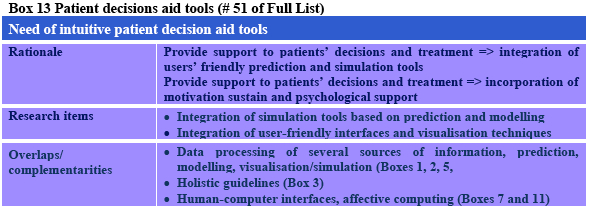
On pages 79-86 are a series of gap analysis tables (20 in all) addressing a wide range of areas associated with PHS.  Below is the Table addressing Patient Decision Aid Tools.

While the above gap analysis tables are instructive, they are not terribly “deep” and at times come across as superficial – thus would make good fodder for a “high-level” presentation to a less informed audience.

Arguably the best Table is found towards the end of the report titled: Six Domains of Implementation Gaps.

The table clearly lays out what are the future challenges to broader adoption and use of PHS.  The key take-away here is the surprising similarity between the US and its EU counterparts in the deployment and use of PHS, despite what are very different healthcare system models.  Which raises the question: Will such uber-players in the Personal Health Platforms (PHP) market, e.g., Dossia, Google Health and HealthVault create the systems and platforms required to support PHS data requirements?  HealthVault’s move into international markets, (Canada and Thailand) signal yes, but will providers, payers and ultimately consumers join in?

Still more questions then answers at this early juncture in the development of consumer-focused systems and platforms.  But there is a ray of hope in the global commonality of challenges faced that will lead to increasing attention and subsequently resources dedicated to bridging the gaps, addressing these challenges to create more effective and efficient care delivery models.

Chillmark Research does some very nice digging for useful learnings to be gleaned from an EU-sponsored report on the present and future of personal health systems. The second chart in particular does a great job of outlining the barriers to the establishment of a wholly unified personal health system.

Posted via web from Connected Care Solutions

Federal Telemedicine News: MHS IM/IT Plan Approved


MHS IM/IT Plan Approved

The Military Health System Information Management/Information Technology Strategic Plan for 2010-2015 has been approved by the Senior Military Medical Advisory Committee. Leaders from the Army, Navy, Air Force, Health Affairs, TRICARE Management Activity, Joint Staff, Joint Task Force National Capital Region Medical, and the MHS Office of the Chief Information gathered last summer for a series of workshops to develop the plan.

While there have been strategic planning initiatives that have guided key priorities throughout the last ten years, this new effort by IM/IT leadership across the services, is the first formally approved plan since 1999.

The plan’s ten IM/IT goals that the Military Health Service (MHS) will focus on over the next five years are to:

• Provide rapid, affordable, secure delivery, and life cycle support for IT products and services
• Provide a comprehensive longitudinal EHR for all beneficiaries and care settings
• Implement a governance structure and process to enable effective and efficient use of resources
• Enhance enterprise intelligence through the use of enterprise tools, data, and services
• Advance the MHS personalized health agenda so that patients would have electronic access to their own records, have virtual visits, and be able to refill prescriptions online
• Advance IT interoperability using health, operational, and functional partners to create an accessible and complete virtual lifetime electronic record
• Show how the flow of funds from programming to execution can improve using better cost estimating methodologies
• Establish an innovation lifecycle management process to align IT innovation with MHS strategy
• Improve human capital management by having the right people with the right training and experience on the right job
• Develop processes, guidance, and standards to develop and integrate distributed services and applications so that time and money spent on products can be delivered rapidly and with a minimum amount of modification

In total, the planning team drafted 13 unique action plans and 14 performance measurements to define specific activities, deliverables, and milestones. In the months ahead, the IM/IIT strategic planning team will work with the action plan teams across the MHS and then draft updates, review the IM/IT measures, and determine if and how these measures should link to the broader MHS Value Measures dashboard.

For more information, go to www.health.mil/mhscio/governance.htm.

This would be a great action plan for innovating/improving any health system, from the military to local and regional providers. Hopefully this crosses the president's desk and he adopts some of the major action items to his own health reform agenda. These are the major things that need to be addressed which will have the greatest impact on the health care industry.

Posted via web from Connected Care Solutions

Saturday, January 23, 2010

Unemployment Rate Increased in 43 States in December

From the BLS: Regional and State Employment and Unemployment Summary

Regional and state unemployment rates were generally higher in December. Forty-three states and the District of Columbia recorded over-the-month unemployment rate increases, four states registered rate decreases, and three states had no rate change, the U.S. Bureau of Labor Statistics reported today. Over the year, jobless rates increased in all 50 states and the District of Columbia.
...
Michigan again recorded the highest unemployment rate among the states, 14.6 percent in December. The states with the next highest rates were Nevada, 13.0 percent; Rhode Island, 12.9 percent; and South Carolina, 12.6 percent. North Dakota continued to register the lowest jobless rate, 4.4 percent in December, followed by Nebraska and South Dakota, 4.7 percent each. The rate in South Carolina set a new series high, as did the rates in three other states: Delaware (9.0 percent), Florida (11.8 percent), and North Carolina (11.2 percent). The rate in the District of Columbia also set a new series high (12.1 percent).
emphasis added
State Unemployment

Click on graph for larger image in new window.

This graph shows the high and low unemployment rates for each state (and D.C.) since 1976. The red bar is the current unemployment rate (sorted by the current unemployment rate).

Sixteen states and D.C. now have double digit unemployment rates. Indiana, Missouri and Washington are all close.

Five states are at record unemployment rates: South Carolina, Florida, North Carolina, Georgia and Delaware, and several other states are close.

Posted via web from The World We'll Inherit

Privacy & Security of Personal Health Information | Chillmark Research


On Saturday, Jan. 10th, I’ll be moderating a panel at the Consumer Electronics Show’s (CES) Digital Health Summit. The distinguished panel that includes executives from Dossia, Kaiser-Permenante, Microsoft and Walgreens will address the topic: Who Will you Trust with Your Health Data?

In preparation, I have been doing some research on the subject and following are a few data points for consideration:

Since April 2003, HHS’s Enforcement Office has handled over 9,666 cases that required some form of enforcement/corrective action regarding HIPAA privacy and security violations of Personal Health Information (PHI). That works out to over 1,200 cases a year.

In 2009, PrivacyRights.org reports that there were 46 breaches of PHI representing nearly 80M records.  Note that 76M of those records were from the VA that inadvertently sent one of its RAID drives out for repair without cleansing it of those 76M records of veterans.  If you can’t trust the government to keep your PHI safe, who can you trust?

Subtract the VA outlier and you get about 4M individuals who had their PHI breached in 2009 across 45 documented incidents or about 89,000/breach.  That’s a lot of compromised records!

Also in May of 2009 we saw the Virginia Health Data, Dept of Health Professionals get hacked in which 531,000 individuals PHI were compromised and held ransom by the hackers for a cool $10M.

And let us not forget CVS who was fined $2.25M for sloppy disposal of prescription records.  No one has any idea as to how many individuals may have been compromised in this blunder by a major pharmacy chain.

The scary thing about the above is that these numbers represent documented/reported cases of data breaches and it would be easy to argue that the actual number of breaches that occur in a given year is quite a bit higher (let’s remove the 76M records in the VA breach as that really is out there).

This all raises the question:

If organizations like the VA, the Virginia Health Data, Dept. of Health Professionals and some of the most prestigious hospitals in the country can’t keep PHI safe, who can?

Which logically leads to the next question…

Is there any true, fool-proof way to insure absolute privacy and security of PHI that is held by a covered entity, business associate or even an organization like Microsoft or Dossia acting on behalf of the consumer?

Yes, there are strong passwords, yes, data can be encrypted on a server but for just about every barrier thrown up, hackers have found a way to break in.  Also, beyond just hackers, what is surprising is that a number of the PHI breaches in 2009 were done by employees who were then selling such data to others, such as ambulance chasing lawyers and tabloid magazines.

Which leads me to conclude…

Maybe the belief in absolute privacy and security of PHI is a fallacy.

As we move to digitize PHI through the adoption and use of EHRs by physicians and hospitals it is inevitable that we will see more breaches.  Hopefully, the benefits that we, as a nation and citizens, accrue from the adoption and use of such digital records to better manage our health and coordinate health among our healthcare team will far outweigh the risks we will be taking in the potential compromise of our PHI.

Possibly related posts: (automatically generated)

Posted via web from Connected Care Solutions

Monday, January 18, 2010

Healthcare IT Consultant Blog: Up to $43.2M to GE Healthcare for US Military Patient Monitoring Systems


Sunday, January 17, 2010

Up to $43.2M to GE Healthcare for US Military Patient Monitoring Systems


GE Healthcare in Wauwatosa, WI won a maximum $43.2 million fixed price with economic price adjustment contract to supply patient monitoring systems to the US military as well as federal civilian agencies.
GE Healthcare received its 1st contracts to supply patient monitoring systems to the US military in March 2009, after 2 years of negotiations between the company and the US Defense Supply Center Philadelphia. GE received two 10-year contracts (1 year base with 9 one-year options), worth a maximum of $63 million annually, to supply patient monitoring systems as well as supporting communications equipment and IT systems…

Under the March 2009 contracts, GE Healthcare is also supplying diagnostic cardiology devices and cardiology information archival systems; catheterization laboratory monitoring; Datex-Ohmeda anesthesia delivery, infant incubators and warmers; and fetal monitoring, perinatal information systems, and blood pressure cuffs to the US military and US federal agencies.
For the $43.2 million contract, the date of performance completion is Jan 13/11. There were originally 17 proposals solicited with 9 responses received by the Defense Supply Center Philadelphia, PA (SPM2D1-09-D-8300).

GE Healthcare locks up remote patient monitoring contract with the DoD for $43.2mm, but this is merely the tip of the iceberg in Federal Health IT-related opportunities.

Posted via web from Connected Care Solutions

Friday, January 1, 2010

Billionaire Doctor Puts His Money Where His Mind Is... - Connected Care Solutions


Patrick Soon-Shiong elaborates in this CNBC feature on his ambitious vision and $1Billion philanthropic commitment to build a true naitonal Public HealthGrid.

Boldly, and brilliantly IMHO, Soon-Shiong asserts that we need to stop obsessing over advances in genomic, biotech and nanotech R&D and recognize that health systems, technology parks and even most academic research labs are ill-equipt to discover anything "meaningful" from this deluge of random data. It will be "mathematicians, physicists and computer scientists" that Dr Soon-Shiong believes hold the key to unlocking the greatest potential value for patients, physicians, regional providers, public health agencies and society at large.

The politician inside me hears Dr Soon-Shiong's vision to be a blueprint for sowing the seeds of a hyper-modern renaissance movement in America. By using "team science" to engage the greatest minds from every scientific discipline in one unified pursuit of a wickedly complex problem, Patrick may have unwittingly stumbled onto the secret formula for reshaping the very fabric of society!!


Reblog this post [with Zemanta]

Public Health Informatics Institute | phConnect.org


phConnect is a web-based, interactive, collaboration platform created for public health professionals and those interested in public health to meet, share expertise, and work together on advancing public health. phConnect has been created to foster collaboration and communication across PHIN CoPs, the larger public health community, the health informatics community, and with other partners.

Posted via web from Connected Care Solutions

Public Health Information Network (PHIN) | Communities of Practice - CDC.gov


Welcome to the PHIN Community!

Communities of Practice (CoPs) are working to strengthen the Public Health Information Network (PHIN) as members collaborate, share, and focus on issues prioritized by the PHIN Community. The PHIN Community provides a participatory environment for members to learn, share expertise, and develop informatics solutions to improve public health’s capacity to use and exchange information electronically. PHIN CoPs are now collaborating on phConnect.org.phConnect

Communities of Practice are open to everyone, easy to join, and your level of commitment is up to you. Based on the feedback received from public health and information technology partners, a collaborative approach toward implementing PHIN is needed. CoPs provide that collaborative framework, enabling PHIN members to work together to identify and leverage best practices and standards for public health, information technology, and informatics as they relate to PHIN. Your involvement in a PHIN CoP will not only help set PHIN priorities, but also assist in strengthening and shaping the future of PHIN.

Your feedback will help expand and improve the PHIN CoPs. Please provide comments or feedback by completing the form on the Contact Us page, or by sending an email to phin@cdc.gov. To learn more about existing PHIN Communities of Practice, visit here. To Join a CoP, please complete the online form here.

Posted via web from The World We'll Inherit

Distributed Systems Laboratory at UChicago | Main Page - CSWiki

Distributed Systems Laboratory (DSL) at University of Chicago

The DSL group at University of Chicago's Computer Science Department and lead by Dr. Ian Foster conducts research in various areas of distributed systems with an emphasis on designing, implementing, and evaluating systems, protocols, and applications. Our mission is to prepare the next-generation of researchers and developers in these areas by investigating challenging, high-impact research projects. These projects span many areas, including Grid middleware, Grid applications, and data-intensive scientific computing.

Posted via web from Connected Care Solutions